
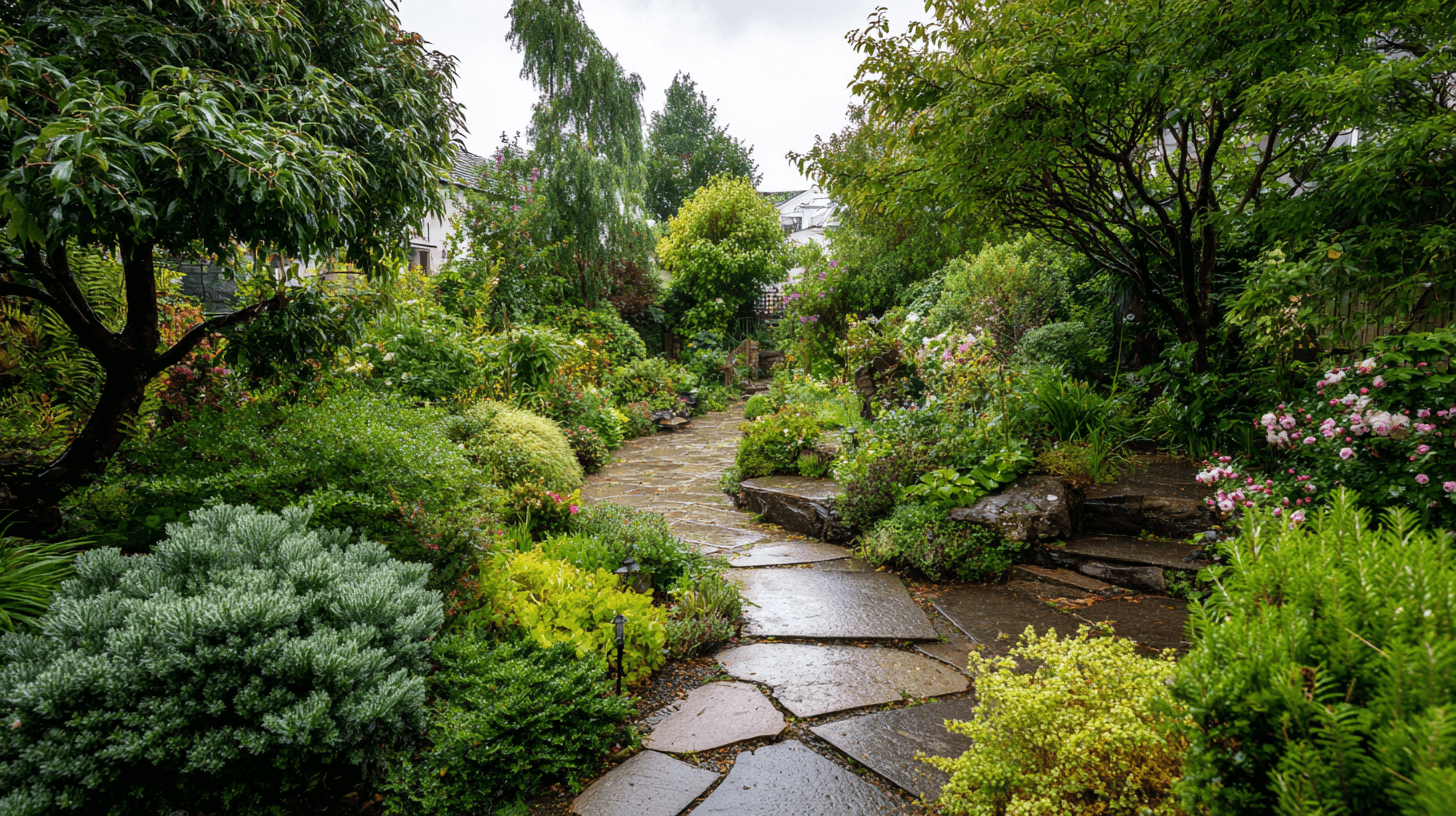
Belfast's unique climate presents both challenges and opportunities for landscaping. Understanding our local weather patterns, soil conditions, and seasonal variations is key to creating thriving, beautiful gardens that work with nature rather than against it.
Belfast Climate Quick Facts
- • Average rainfall: 846mm annually
- • Wettest months: October-January
- • Growing season: March-October
- • Hardiness zone: 8b-9a
- • Mild winters (rarely below -5°C)
- • Cool summers (average 18°C)
- • High humidity year-round
- • Prevailing southwest winds
Understanding Belfast's Climate Challenges
High Rainfall & Waterlogging
Belfast receives significantly more rainfall than the UK average, with wet conditions persisting for much of the year. This creates several landscaping challenges:
- Waterlogged soil: Poor drainage leads to root rot and plant death
- Compacted ground: Heavy clay soils become impermeable when wet
- Fungal diseases: High humidity promotes plant diseases
- Erosion: Heavy rainfall can wash away topsoil and mulch
- Limited growing season: Wet conditions extend into spring and autumn
Soil Conditions in Belfast
Belfast's geology creates specific soil challenges that affect landscaping:
Common Belfast Soil Types:
- Heavy Clay: Predominant in many areas, retains water but becomes hard when dry
- Glacial Till: Mixed soil with stones, variable drainage
- Peat Bog: In some areas, acidic and waterlogged
- Sandy Loam: Rare but excellent for gardening when found
Wind Exposure
Belfast's coastal location means gardens often face strong winds, particularly from the southwest. This affects plant selection and garden design:
- Salt spray: Coastal areas experience salt damage to plants
- Desiccation: Strong winds dry out plants and soil
- Physical damage: Wind can break branches and uproot plants
- Microclimate creation: Buildings and hills create wind shadows and tunnels
Drainage Solutions for Belfast Gardens
Surface Drainage Systems
Effective surface drainage is crucial for Belfast gardens. Here are proven solutions:
- French Drains: Gravel-filled trenches redirect water away from problem areas
- Permeable Paving: Allows rainwater to soak through rather than run off
- Soakaways: Underground chambers collect and slowly release water
- Swales: Shallow channels direct water flow naturally
- Raised Beds: Elevate planting areas above waterlogged ground
Soil Improvement Techniques
Improving Belfast's heavy clay soils is essential for successful landscaping:
| Method | Benefits | Best For |
|---|---|---|
| Organic Matter Addition | Improves structure, drainage, nutrients | All garden areas |
| Grit/Sand Addition | Increases drainage, reduces compaction | Heavy clay areas |
| Lime Application | Improves clay structure, raises pH | Acidic clay soils |
| Deep Cultivation | Breaks up compacted layers | New garden areas |
Rain Gardens for Belfast
Rain gardens are particularly effective in Belfast, turning drainage problems into attractive features:
- Strategic placement: Position in natural low points or where water collects
- Plant selection: Use moisture-loving plants that thrive in wet conditions
- Mulching: Prevents soil erosion during heavy rainfall
- Overflow planning: Include overflow routes for extreme weather events
Plant Selection for Belfast's Climate
Native Plants That Thrive
Native Irish plants are naturally adapted to Belfast's climate and require minimal maintenance:
Top Native Plants for Belfast Gardens:
Trees & Shrubs
- • Hawthorn (Crataegus monogyna)
- • Rowan (Sorbus aucuparia)
- • Blackthorn (Prunus spinosa)
- • Gorse (Ulex europaeus)
- • Elder (Sambucus canadensis)
Perennials
- • Wild primrose (Primula vulgaris)
- • Foxglove (Digitalis purpurea)
- • Heather (Calluna vulgaris)
- • Ferns (various species)
- • Wild garlic (Allium ursinum)
Moisture-Loving Plants
For areas with persistent moisture or poor drainage, these plants excel:
- Astilbe: Feathery flowers in shade, loves moisture
- Hostas: Excellent foliage plants for damp, shaded areas
- Ligularia: Bold leaves and bright flowers
- Rodgersia: Architectural foliage, dramatic presence
- Iris pseudacorus: Yellow flag iris, perfect for wet spots
- Gunnera: Giant leaves for statement planting
Wind-Resistant Plants
For exposed Belfast gardens, choose plants that can handle strong winds:
- Escallonia: Evergreen shrub with small leaves
- Griselinia: Excellent coastal hedge plant
- Pittosporum: Glossy leaves, wind-tolerant
- Ornamental grasses: Bend with wind rather than breaking
- Lavender: Mediterranean plant that handles wind well
Seasonal Maintenance Calendar
Spring (March-May)
- Soil preparation: Add organic matter when soil is workable
- Drainage check: Clear blocked drains and gullies
- Pruning: Prune winter-damaged growth
- Planting: Best time for new plantings
- Lawn care: First cut when grass starts growing
Summer (June-August)
- Watering: Deep, infrequent watering during dry spells
- Deadheading: Remove spent flowers to encourage more blooms
- Pest monitoring: Watch for slug and snail damage
- Harvesting: Collect herbs and vegetables regularly
- Lawn maintenance: Regular mowing and edge trimming
Autumn (September-November)
- Leaf management: Clear leaves from lawns and drains
- Planting: Good time for trees and shrubs
- Bulb planting: Plant spring bulbs before ground freezes
- Drainage maintenance: Clear gutters and drains
- Protection: Protect tender plants from wind
Winter (December-February)
- Planning: Design changes and order plants
- Tool maintenance: Clean and service garden tools
- Structural work: Install hard landscaping
- Wildlife support: Provide food and shelter for birds
- Storm damage: Check and repair after winter storms
Creating Microclimates
Shelter and Windbreaks
Creating sheltered areas allows you to grow a wider range of plants:
- Living windbreaks: Plant hedges or tree belts
- Structural shelter: Use fences, walls, or screens
- Positioning: Place tender plants in sheltered spots
- Gradual transition: Create stepped shelter rather than solid barriers
Maximising Warmth
Make the most of Belfast's limited sunshine and warmth:
- South-facing aspects: Reserve for heat-loving plants
- Thermal mass: Use stone or brick to store and release heat
- Reflective surfaces: Light-coloured walls reflect light and warmth
- Raised beds: Warm up faster in spring
Sustainable Practices for Belfast Gardens
Water Management
Despite high rainfall, smart water management benefits Belfast gardens:
- Rainwater harvesting: Collect roof water for dry periods
- Mulching: Reduces evaporation and suppresses weeds
- Drought-tolerant plants: Reduce watering needs
- Efficient irrigation: Drip systems for targeted watering
Organic Gardening
Belfast's climate supports organic gardening practices:
- Composting: Turn garden waste into valuable soil improver
- Natural pest control: Encourage beneficial insects
- Organic fertilisers: Use seaweed, compost, and natural feeds
- Companion planting: Use plants to support each other
Climate-Smart Landscaping in Belfast
Work with Belfast's unique climate to create a thriving, sustainable garden. Our experienced team understands local conditions and can design landscapes that flourish in our challenging but rewarding environment.